

Tribhuvan University Logo

Tribhuvan University

Department

Thapathali Campus

Department of Electronics And Computer Engineering

Empowering the next generation of scientists and engineers through innovative education, cutting-edge research, and practical applications.

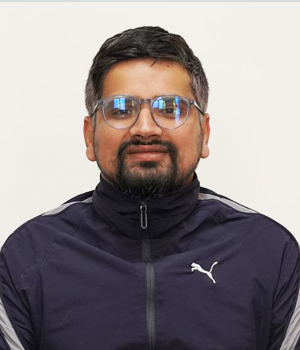
Umesh Kanta Ghimire

Message From Head of Department

Welcome to our campus! As the Department Head, I am delighted to have you join our vibrant community. Our campus is a place where students are encouraged to explore their passions, expand their horizons, and create lasting memories. We strive to provide a nurturing and inclusive environment that fosters academic excellence, personal growth, and holistic development. With state-of-the-art facilities, dedicated faculty members, and a wide range of co-curricular activities, we aim to empower our students to become future leaders and make a positive impact in their chosen fields.

Umesh Kanta Ghimire

Head of Department

ABOUT DEPARTMENT

Department of Electronics And Computer Engineering

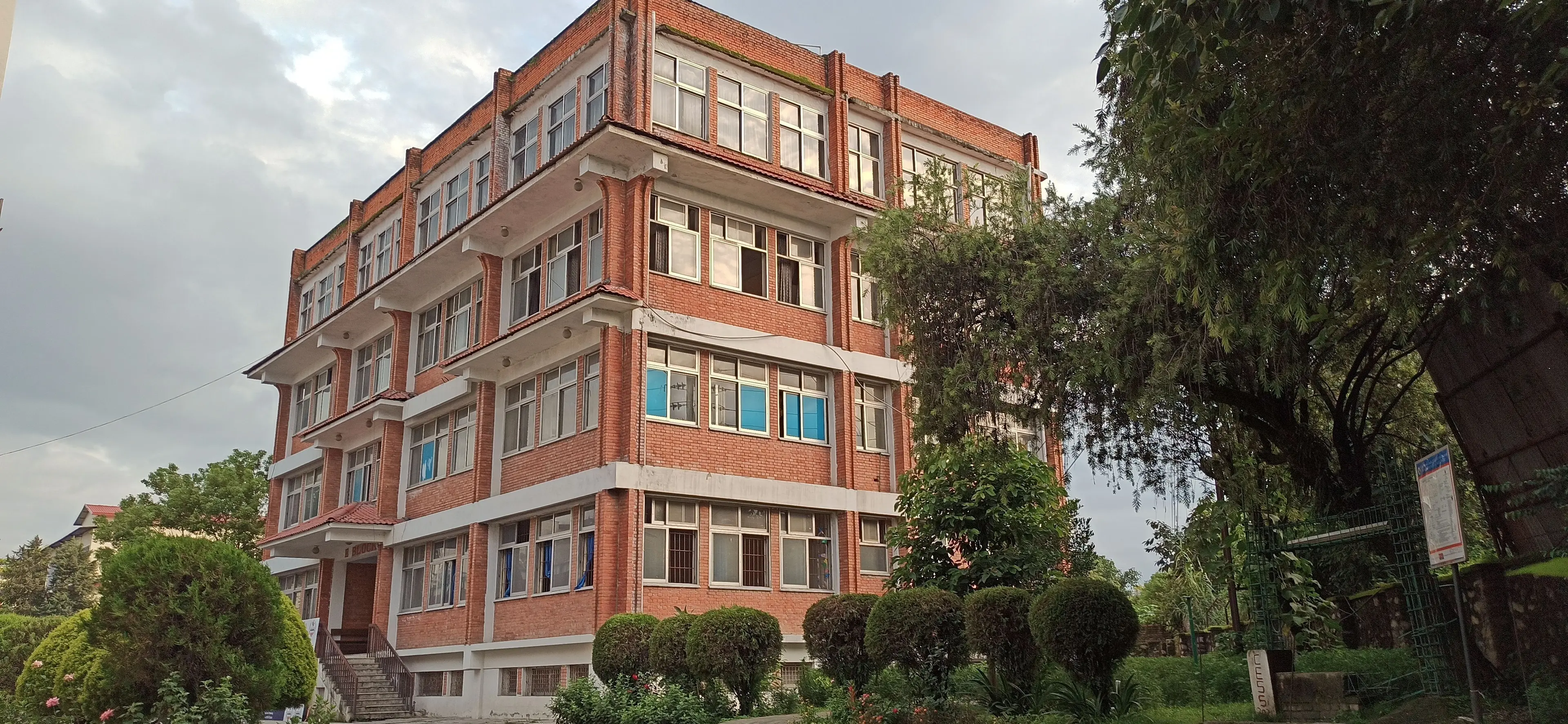
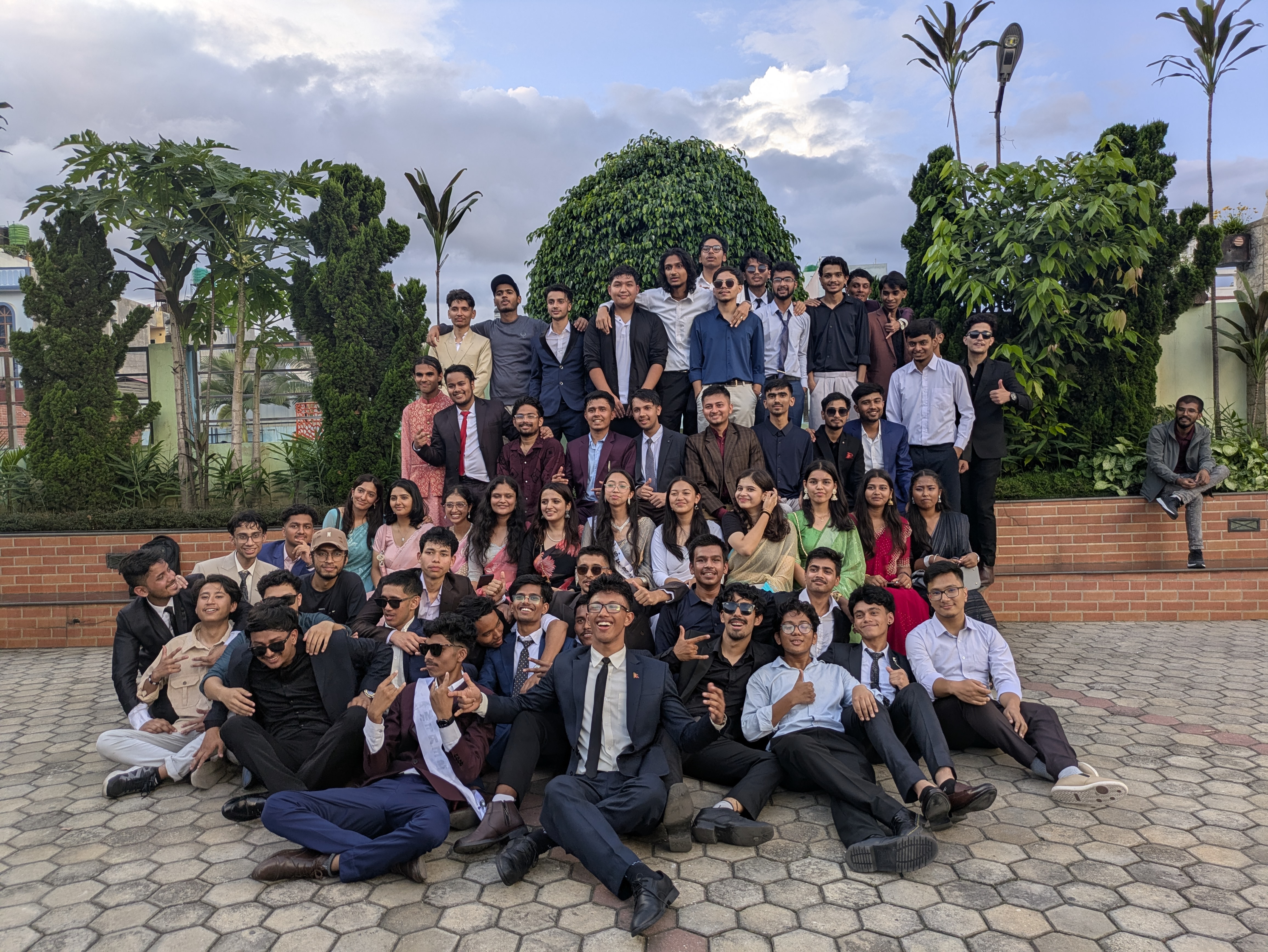
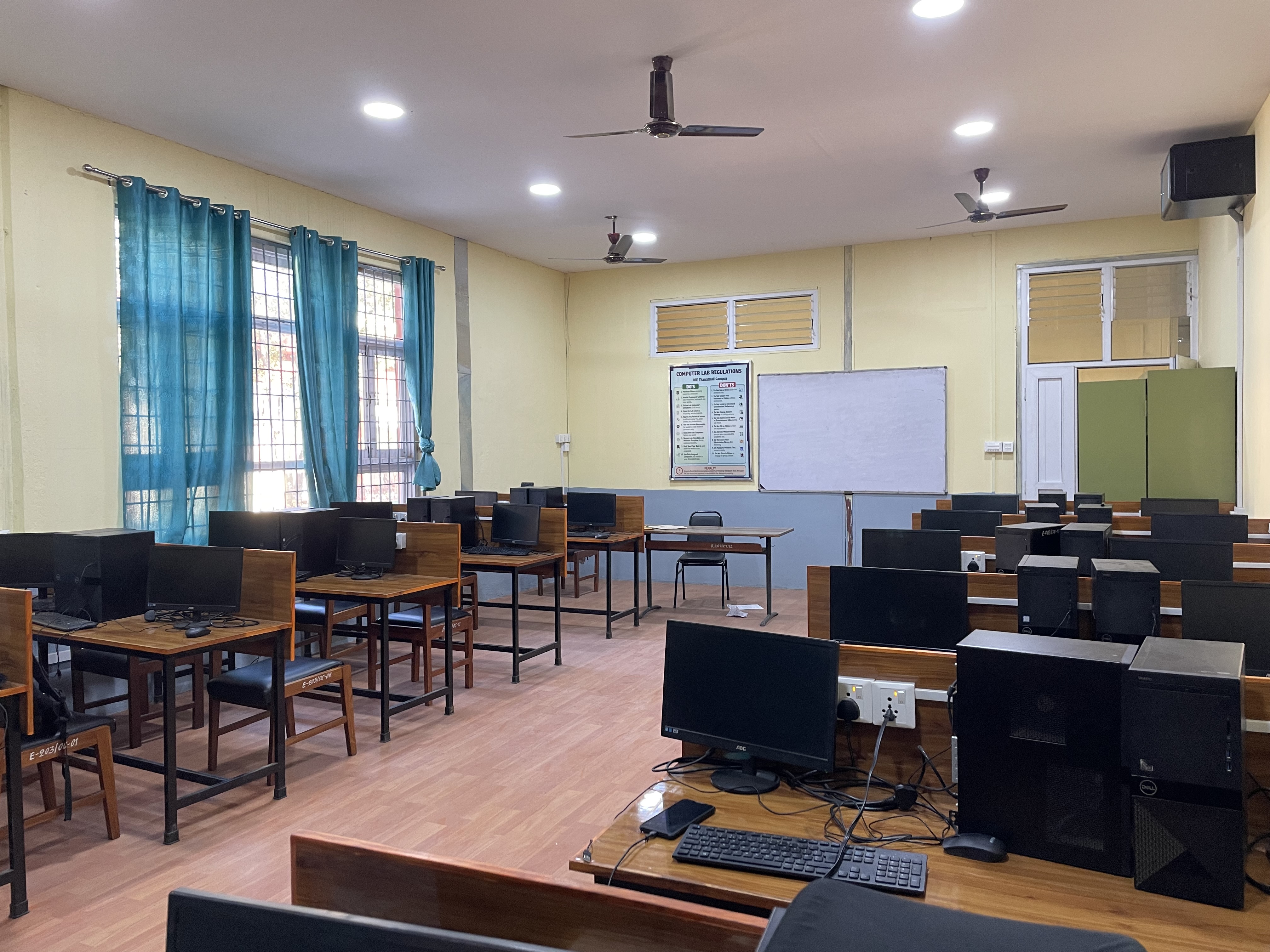
The Department of Electronics and Computer Engineering (DOECE) at Thapathali Campus, Tribhuvan University, is dedicated to providing high-quality education and research opportunities in the fields of electronics, computer science, and engineering. The department offers undergraduate and postgraduate programs that focus on the integration of electronics, software, and system design. With a strong emphasis on practical knowledge and innovation, DOECE prepares students to excel in areas such as embedded systems, communication technologies, robotics, and software development. The department is committed to fostering academic excellence, research, and industry collaboration to meet the evolving demands of the tech industry

Department of Electronics And Computer Engineering

Open Forms

1 active
BCT 2080 Elective-II Subject Selection Form
Dear Students, Please fill out this form to select your Elective-II subject for the upcoming semester. Please refer to the downloads section to see the syllabus for your elective subjects - https://doece.tcioe.edu.np/downloads Important: You may select only ONE elective subject. A subject will be offered only if at least 12 students select it. If fewer than 12 students choose a subject, the department may cancel that elective. Students affected by cancellation will be asked to select another available subject.

Department of Electronics And Computer Engineering

Discover Our Department

Academic Programs
Comprehensive undergraduate and graduate programs in applied sciences
Faculty & Staff
Meet our distinguished faculty and dedicated staff members
Research Excellence
Cutting-edge research projects and innovative solutions

Research & Innovation

Featured research, projects, and journal pieces

Fresh scholarship and student projects anchored to the department, all in one place.

Research
Published
Wavelet-space representations for neural super-resolution in rendering pipelines
We investigate the use of wavelet-space feature decomposition in neural super-resolution for rendering pipelines. Building on recent neural upscaling frameworks, we introduce a formulation that predicts stationary wavelet coefficients rather than directly regressing RGB values. This frequency-aware decomposition separates low- and high-frequency components, enabling sharper texture recovery and reducing blur in challenging regions. Unlike conventional wavelet transforms, our use of the stationary wavelet transform (SWT) preserves spatial alignment across subbands, allowing the network to integrate G-buffer attributes and temporally warped history frames in a shift-invariant manner. The predicted coefficients are recombined through inverse wavelet synthesis, producing resolution-consistent reconstructions across arbitrary scale factors. We conduct extensive evaluations and ablations, showing that incorporating SWT yields superior perceptual quality compared to industry baselines, while maintaining real-time performance on modern hardware. Taken together, our results suggest that wavelet-domain neural super-resolution provides a principled and efficient path toward higher-quality real-time rendering, with broader implications for neural rendering and graphics applications

Department research · Sponsored initiative

Ongoing

Projects
Featured projects land here soon
Hands-on solutions and prototypes from our department teams.

Coming soon: a student or faculty showcase from the latest term.

Journal
Other
SVM, KNN, Random Forest, and Neural Network based Handwritten Nepali Barnamala Recognition
Nepali Barnamala consists 36 consonants, 12 vowels and 10 Nepali digits. Among them, this paper uses the 36 consonants and 10 Nepali digits for the recognition using machine learning based algorithm mainly: Support Vector Machine (SVM), K-Nearest Neighbors (KNN), Random Forest (RF) and several architectures of neural networks. In this paper, different kernel tricks of SVM with different regularization parameters has been used to train model and has compared their accuracy and F1-score. In KNN, accuracy and F1-score are compared with different values of K and distance matric. In Neural Networks, training accuracy, training loss, validation accuracy, and validation loss are compared with different number of hidden layers regularization parameters and learning rate. Different hyperparameter of random forest are changed and compared to their corresponding result. This paper uses the Kaggle dataset of school students’ Nepali handwritten characters. The dataset is CSV format with 78,200 rows for forty-six different classes with 1024 (32*32 image size) columns plus one column for label of characters for training and 13,800 rows for testing. For handwritten Nepali Barnamala recognition, the best average accuracy is 93.51% of neural networks with four hidden layers.

Department journal · Dec 15, 2021

DOI: 10.3126/jiee.v4i2.38254

Kiran Chandra Dahal, Bal Krishna Nyaupane, Rupesh Kumar Sah

Submissions

Submit Your Work

Students and faculty can submit projects and research work. Verify with your campus email and the department will review before publishing.

Submit Project

Share your final year, capstone, or academic project with the department.

  • Project details & abstract
  • Team members & supervisor
  • GitHub & demo links
Submit Project

Submit Research

Document your ongoing or completed research work and findings.

  • Research methodology
  • Expected outcomes
  • Publication URLs
Submit Research

Use your campus email (@tcioe.edu.np) for verification. All submissions are reviewed before publishing.